My first life crisis came when I turned twenty-eight. Approaching thirty, I had to finally face up that I would never again be nineteen. After several years of weekly therapy I got past it, mostly, and moved on.
My second life crises came during my latest trip to Switzerland.
~
I started working in Switzerland in January, 2018. At that time, I assumed I would be there indefinitely, and after a few months started thinking about Swiss citizenship, arguably one of the most desired citizenships in the world. It would be a stretch: it’s hard for Americans to become Swiss citizens unless you have a lot of money and/or family connections. However, I was working for a Swiss company, my German was okay, and I had started building a life there.
COVID changed all that. In March, 2020, my department went into home office. For the next year, I split my time between Chur and Montpellier. By the summer of 2021, with no end to the home office rule in sight, my company agreed that I could move back to France and work from home full time. As I write this, four years on, I am working on my French citizenship, but I sometimes wonder how it would have gone had there been no COVID: would I be on track to become Swiss? Would I be able to extend that to Annie and Catherine?
I’m not disappointed. We are happy to be in France, and appreciate the luck we’ve had to be able to move and stay here.
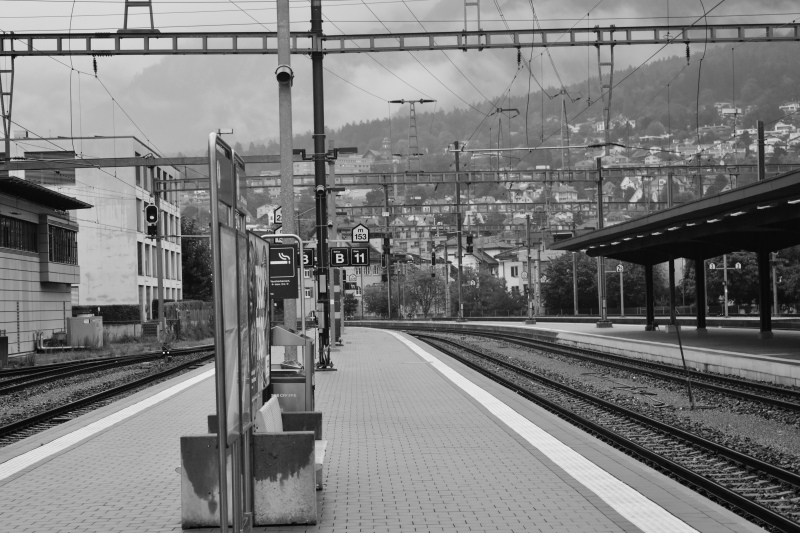
My first return visit to Switzerland was in August, 2024 (link here) – a short stay. This last time I went back for longer almost, three weeks. I stayed in Chur, where I had lived, and commuted by train to the office, in Bonaduz.
~
I’m so special
Courtesy of Radiohead…
Home office is great until you have to go into the regular office.
At home I have freedoms unavailable in an office: sit at the computer having rolled out of bed thirty seconds ago, take a nap at lunch or in the afternoon or both, organize my office or otherwise get things done while listening in on a meeting, wear whatever is convenient.
That said, at least once a month, so I don’t turn too feral, I’ll dress as if I were going into the office: pants, or shorts if it’s hot, shoes, some sort of work appropriate shirt. It’s a bit like those foreign legion officers, stationed in some remote, desolate outpost, who remain true to all protocols, dress codes, and ceremonies.
Back in the office, I had to pay much more attention to my behavior, having forgotten the corporate rituals and customs:
- There is a card key you use to get in and out of the building. In addition, when you get near your office, you must again touch the key to a wall mounted console. When you take a break or go to lunch, you sign out in the same way. Out of this habit, I forgot to do this for the first few days. It didn’t matter much if I don’t clock in: I have a surplus of 100 hours (overtime), which because I am now in France, I cannot take as additional vacation time, nor get cashed out.
- There’s always a hello, Guten Morgen, hoi, moin, salut, gruezi, ciao, or similar when passing people in the hall. At home it’s just Annie and the cats, all of whom ignore me.
- There’s no burping, farting, ear wax strip-mining, nasal drilling and excavation, or other unmentionable habits.
- The worst is lunch in company cafeteria. There is a new, nice lunch room with three different types of meals, salad bar, sophisticated espresso machines, as nice as anything in Silicon Valley. And yet, it’s stressful. It feels like high school again: walking around with a tray, who did you sit with (often a decision made easier since you are with your team), who’s that person, why are there so many people here? I walk around looking like Forrest Gump when he’s with the semi-naked Robin Wright in her dorm room.
It was good to be at the office. But there my productivity drops; at home I get way more work done. And I can be the special person that I am.
~
Zürich – a Saturday looking for books
I was in search of books in English. I began with the Transa Book store; I thought the store name referred to translated books, and therefore would have many translated (English) books. It didn’t. It was an annex of a sports shop, filled with travel books, maps, etc. Strike one.
I then walked twenty minutes to Pile of Books. When I finally arrived, on the door was a hand written note stating they were closed for ten days, and they would return on the day I was leaving Switzerland. This information had not been on their website. Strike two.
By then it was lunch time and I made my way to La Tanqueria. Along the way, there was some graffiti: Death, Death, Death to the IDF. A few blocks later I passed several families of Hasidic Jews, the men in black outer garments with white shirts, curled hair, the women in dark skirts, hair under a scarf.
At La Taqueria I got the carnitas plate with a Pacifico beer. They don’t bring out baskets of chips and little bowls of salsa like they do at Mexican restaurants in the United States – maybe that’s a good thing. As I waited, I saw the waitress bring two large burritos to two young women, both rather petit. I compared the size of the burritos to the women, and estimated each burrito was easily 8 to 12%, by volume, if not weight, of the women. I was reminded of the B. Kliban drawing, advising to never eat anything bigger than your head.
Fortified by Mexican food and beer, I decided to try one more bookstore. Against my better judgement, I searched for bookstores in Google maps, and allowed myself to be swayed by a particular store’s reviews. I walked another twenty-five minutes, through a tunnel, across a bridge over the Sihl River. It took me a while to find, because the store was behind a construction fence, and was located in the basement of the building. It didn’t look promising.
I was wrong.
Bücher-Brocky is a used book and media store; for those lucky few in the know, it’s similar to world famous Wonder Book and Video in Hagerstown, Maryland. I bought books by Robert Little, Fay Weldon, Jim Harrison, and James Meek. When scanning books shelves, I looked for certain designs that indicate a particular publisher, whether it’s the many sub-species of the Penguin imprint or the red spine of Vintage. Seeing the nyrb (New York Review of Books) logo at the bottom of a book spine, I picked up George R. Stewart’s Fire. Elsewhere I found a stack of something called Penguin 60s, small format books, named so for Penguin’s 60th anniversary. I bought three, each containing short stories or essays by Albert Camus, Muriel Spark, and Anton Chekov. In all I got out with about nine books for 26Chf – an absolutely amazing deal, especially for Switzerland. Home run.
~
Zürich – a Sunday visit the Kunsthaus Museum
I had never visited this excellent museum. Part of it was due to covid-19, but also, somehow, my life had grown distressingly practical, all in good service of wife, children, job, owning a home, being a citizen and a consumer. Road trips, all nighters, two-leather jacket retail therapy, and wandering a museum looking at pictures – clearly I was out of practice with these sorts of things. But it did not take long to get back.
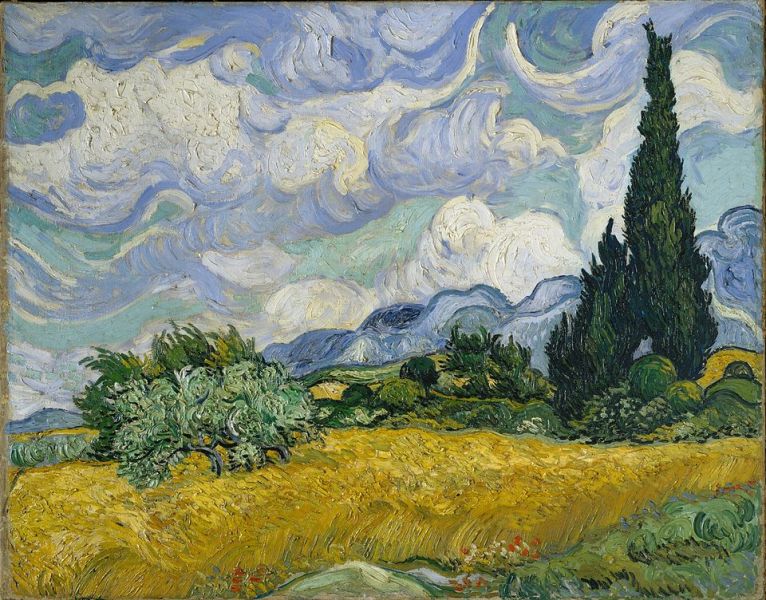
On that Sunday, as I stood in front of Van Gogh’s Le Cyprès et l’Arbre en Fleurs (1889), paint so thick it was almost three dimensional, it occurred to me that Van Gogh had stood here too, in front of this very painting, this exact thing, one-hundred thirty-six years ago. At that time, in France, he had his brushes, paints, rags, and his own interpretation of the world. Now the painting is framed and hung on off-white colored wall, while an American, residing in France, visiting Zurich, regards, considers, absorbs his vision.
This isn’t any sort of somewhere in time mystical experience, but a simple wonder and appreciation of what the artist created, and that very same thing is here, now in front of me. Something similar could be said for the experience of standing in an ancient temple or looking at the pyramids, but I liked the intense singularity that came from just me, the painting, and in it, somewhere in time, the painter.
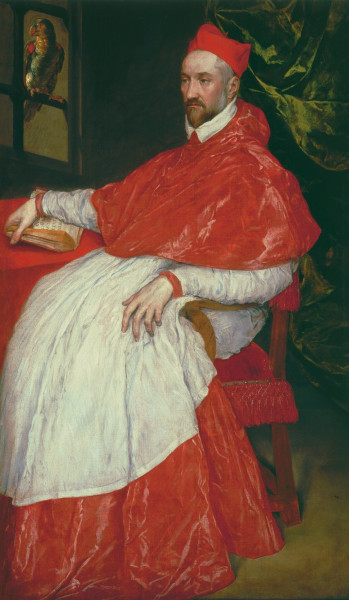
There were others that were much older, of a past world that is hard to understand, but may be one we are returning to. A good example was El Greco’s cardinal in velvet red (Portrait de Charles de Guise, 1572), stunning and vaguely disturbing.
~
Sights seen, on foot, from the train
1980’s vintage bright orange Volkswagen rabbit, on top a three fin baby blue short (surf)board.
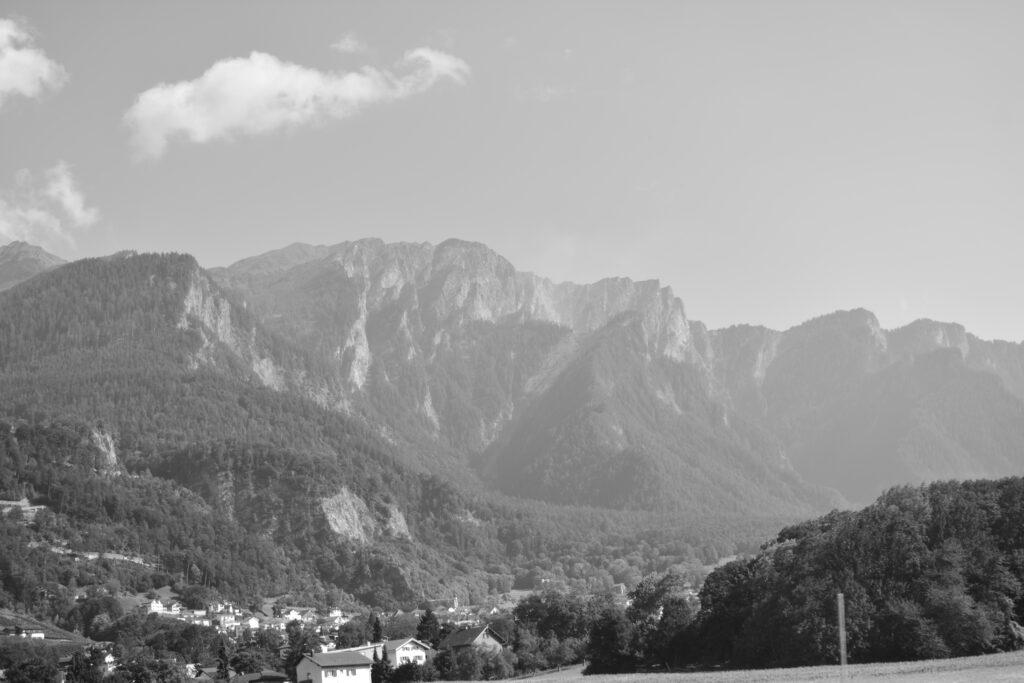
Near Sargans: clear mountain peaks, with the slightest refracted, molecular light, grainy yet with edges sharp against the sky,
On the train from Zurich: a building roof top about thirty new Audi SUVs Audis, all metallic grey.
Lakeside swim club sign: Ja, Nein, Vielleicht (perhaps) : the options to swim in the cool to cold water.
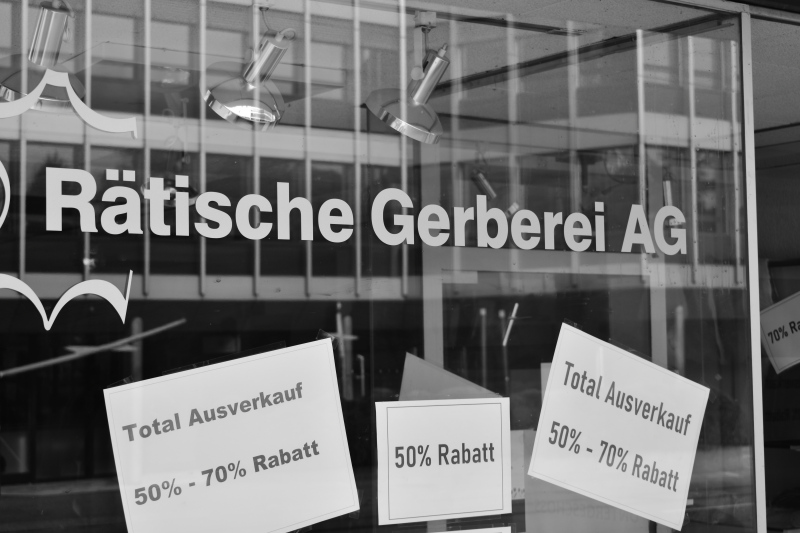
In France stores often have an erie suffix after the product name: fromagerie, boucherie, boulangerie, cartoucherie (cartridges, as in firearms, not toner). So when I passed a store in Chur with the name Gerberei, I wondered if it was a store for gerbils. I never went in.
Later the weather turned cool, cloudy, and there was some rain. Clouds were stuck in the ravines between mountains, a full scale Chinese pen and ink large scroll painting.
~
Pretty soon now you’re gonna get older
Courtesy of David Bowie.
While in the office, one morning I met with Tobias to talk about the latest practices in respiratory therapy; he’s a respiratory therapist and now a product manager for one of our mechanical ventilators. We discussed breathing circuit setup, the most common patient settings, ventilation modes, etc. Later we had lunch, talked about our families, made tentative plans, maybe getting a beer sometime after work. Although I was in town for almost three weeks, we never went out for drinks.
There are eight other people on my team, some close to my age, others as young as their early thirties. We get along well, all were happy to see me in the office, yet not one invited me for drinks, dinner, anything. I’m not sure what I was expecting, but I thought someone would have wanted to get together at least once.
And thinking back on it, this had been the case during the years I lived in Chur (the town near my office): except for two other co-workers people, I didn’t really socialize with anyone from work.
Of course, they already has their own lives: families, children, their own routines, and as such it did not occur to them to do anything with me. Perhaps there were cultural differences. Perhaps because I was there without Annie; whatever reservations people might have about me are instantly voided when they meet her: “Well if she’s with him, he must be okay.”
Then, during my stay in August, back at my hotel, I read Ian Leslie’s essay, 27 Notes on Growing (Older); from number 11:
You’re constantly having to arbitrate between your felt age and your real age, reminding yourself that you’re not actually that person anymore, making a special effort to act appropriately (maybe you shouldn’t actually go skiing, or drink six pints, certainly not both). If you’re a young person, and you’re talking to an older person, it’s as well to remember that they may well believe, at some level, that they’re the same age as you. Many such conversations are asymmetrical: the young person always aware of the age gap, the older person not so much.
This was it. I did not see myself as different from my co-workers, even if they were thirty-years younger than me. I knew there was an age gap, but didn’t really think about it. Yet as Leslie notes, they were aware of the gap, and I think more than anything, the non-invitations to socialize were because of my age. In my own mind I still see myself as exceptional and unmatched, at times even amazing, but that’s not how I always appear, and certainly not young.
This, then, was the second crisis, although perhaps acceptance is the better word. Best as I had tried, I could not longer ignore it: I was absolutely, positively not nineteen anymore. There had been signs along the way, even recently:
- I had recently met high school friend Leigh in Arles, and we greeted with each other with, ‘So, what have you been up to for the past forty-five years?’
- On my train ticket to Switzerland, next to the fare was written ‘Senior’. The horror.
- Email from Social Security and the French equivalent about retirement distributions.
- The awareness that I was now entering the zone where it became more and more likely that when I went to sleep, I might not wake up.
There’s nothing to be done, except adapt and make the best of it. The obituary of a friend who died recently noted that …He faced ALS with quiet grace and stoicism. I like that.
~
One more thing. There’s always something somewhere about how doing tai-chi or drinking kombucha or thinking about puppies will add five years to your life. Do I really want to add five years to my life? That means if my current expiration is at eighty-five, then doing one or all of these means I’d make it to 90? That doesn’t sound so great.
How about this instead: if I am scheduled to die at eighty-five, but I practice tai-chi, drink kombucha, and think about puppies, can I instead repeat being nineteen five times – can I do that?




Similar life crisis:
You go to a bar and realize that all the women see you as someone's dad
And it only gets worse:
You go to a bar and realize that all the women see you as someone's _grandfather_
I'm always a bit surprised that the guy in the mirror looks much older than I feel.
I find some solace in what a friend once told me: "you can only be young once, but you can be immature forever"
Totally agree. That in the bar experience – first time it's brutal. Not so much from ego, just a high speed NHL style body check into reality.
I think our wives would agree on the immature aspect.
Would you *really* want to relive nineteen? Yes, at some point we may not reawaken. Sounds like a decent way to go, considering the alternatives.
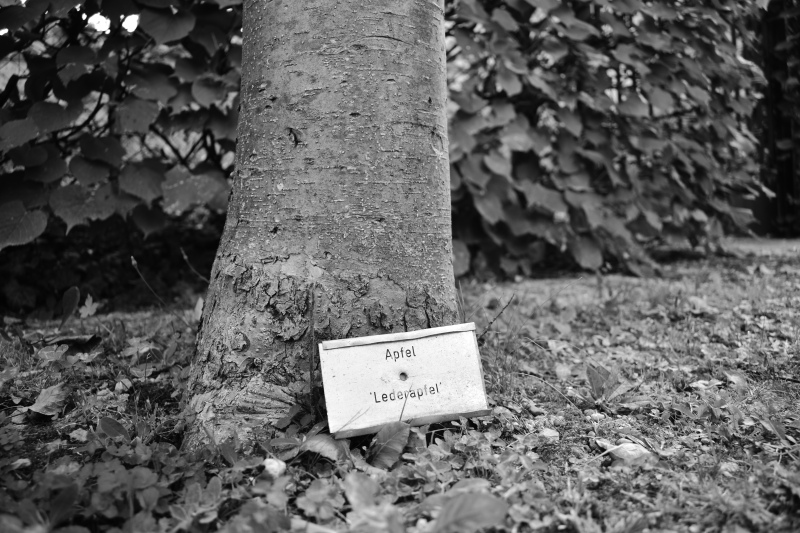
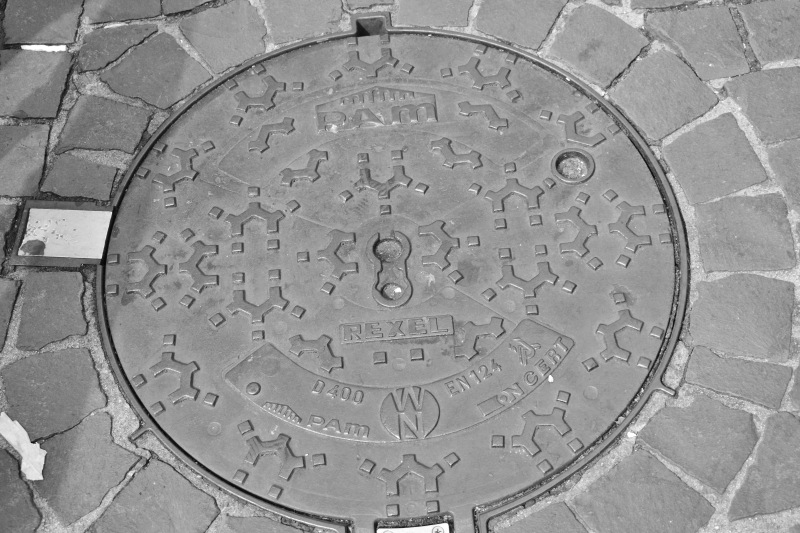
Thank you for the pics of the manhole cover, the faucet, and the shrubbery (“I’d like a shrubbery…not just ANY shrubbery…”); all things important in their way to the preservation of life, no matter how overlooked.
I think the MP KWSN requested something with laurels….?